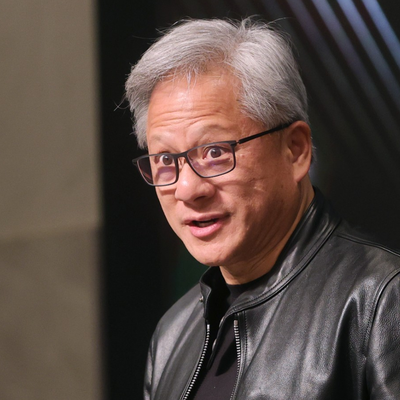
The loudest fight on the frontier is the one that is quietly ending. Nearly every serious builder now concedes the point NVIDIA's Jensen Huang made bluntly: "Proprietary versus open is not a thing. It's proprietary and open" (blogs.nvidia.com). The binary is dissolving in real time. What remains underneath it is a sharper and more durable divergence — not over whether weights are published, but over who governs release and who controls deployment. For enterprises, that distinction is where the advantage actually lives.
The binary is dissolving
Open weights are no longer a fringe or a challenger tactic; they are shipping from every tier of the frontier. Google DeepMind released Gemma 4 and positioned it as its most capable family of open models (blog.google). Thinking Machines released Inkling, a 975B-parameter multimodal MoE, as its first open-weights model (thinkingmachines.ai). Cohere shipped North Mini Code, a 30B model it calls its first open-source agentic coder, deployable on-prem or locally (cohere.com). xAI open-sourced its coding agent Grok Build (x.ai). DeepSeek's Liang Wenfeng said the lab is likely to keep its top models open source (reuters.com).
Even the original closure argument has been recanted. OpenAI's Sam Altman wrote that the company's early worry about releasing GPT-2's weights was, in retrospect, misplaced (openai.com). The center of gravity has moved. "Should we open the weights" is settled in practice. "Under what governance, and on whose infrastructure" is not.
The real axis: governance vs. method access
Strip away the branding and two genuinely different positions remain. One camp treats governance — a gate before release — as the load-bearing control. Anthropic's Dario Amodei argues that all sufficiently capable models, open and closed, should pass mandatory safety testing before release (anthropic.com), while pointedly clarifying that Anthropic has never advocated banning open weights and that open models without dangerous capabilities are a public good. The gate, in this view, is the capability, not the license.
The other camp treats method access itself as the safeguard. Hugging Face's Clément Delangue argues open source should be expanded, not restricted, because open models mean more control, transparency, and cheaper adaptable AI — and that restricting them "wouldn't make AI safer" (linkedin.com). Andrew Ng frames the regulatory push more adversarially, warning of efforts to use safety arguments "to suppress open source" as a form of regulatory capture (deeplearning.ai). This is the actual fault line: governance-as-gate versus method-access-as-defense. The open/closed label is downstream of it.
Where the enterprise advantage sits
For a buyer, neither ideological camp pays the bill. The advantage is control of the deployment surface. Cohere's Aidan Gomez put the shift plainly: "Enterprises no longer want to rent AI — they want to own it" — across cloud, VPC, on-premises, and fully air-gapped environments (cohere.com), arguing that real sovereignty means owning the underlying infrastructure, not just clearing regulation (fii-institute.org). Open weights matter here not as a philosophy but as a lever: they let the model sit on infrastructure the enterprise controls.
The vendors are converging on the same answer from the closed side. Mistral Workflows splits deployment between Mistral's control plane and customer-run Kubernetes workers, keeping customer data and business logic inside the customer's own environment (mistral.ai). DeepSeek's V4 API lets buyers keep the same base URL and swap only the model name, supporting both OpenAI and Anthropic API formats (api-docs.deepseek.com) — portability as a feature. And Google Cloud's Agent Platform now exposes first-party, partner, and open-weights models — Claude, Grok, Mistral, DeepSeek, Llama, and Qwen — in a single control plane (docs.cloud.google.com). The winning enterprise posture is not allegiance to open or closed. It is optionality plus control: keep the model swappable, keep the weights and data on infrastructure you govern.
What to watch
The governance camp's real teeth are not in bans but in enforcement mechanics. Amodei has paired mandatory pre-release testing with a call to crack down on industrial-scale distillation (anthropic.com). Watch whether "mandatory testing for capable models" hardens into a release chokepoint — because that, not the open/closed label, is where the balance of power on the frontier will actually be decided.