The capability curve has flattened at a high level, and it did so quietly. Within a single 2026 release window the major labs shipped models that are, by their own accounts, broadly interchangeable at the top: xAI positioned Grok 4.5 as its smartest model for coding, agentic tasks, and knowledge work (per x.ai); Anthropic shipped Claude Sonnet 5 as its most agentic Sonnet yet and made it the default for free and paid users (per Anthropic); Google DeepMind opened the Gemini 3.5 family explicitly for complex agentic workflows (per blog.google); OpenAI rolled GPT-5.4 across ChatGPT, its API, and Codex; and DeepSeek previewed V4 with a one-million-token context window (per api-docs.deepseek.com). Five frontier labs, one quarter, converging capability. Raw model power is no longer the scarce input.
Two numbers explain why. OpenAI says the price per million tokens fell 97 percent from GPT-4 to GPT-5.4 (per openai.com). Google says it now processes more than 3.2 quadrillion tokens per month and that the Gemini app has passed 900 million monthly active users (per blog.google). Capability is not only abundant; it is cheapening and diffusing faster than most enterprises can absorb it. When intelligence becomes a commodity input, the frontier stops being about what a model scores and starts being about what a system can be trusted to do unattended.
Every roadmap now points at agents
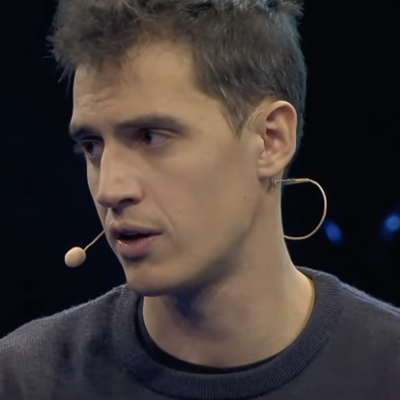
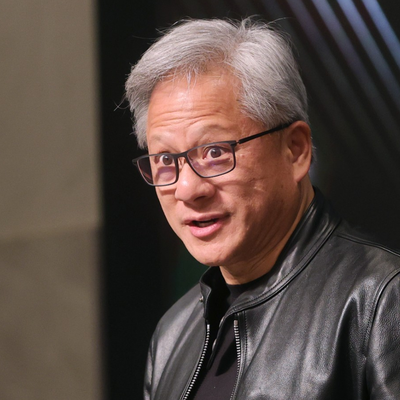
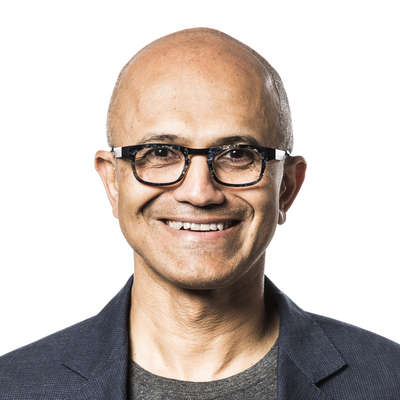
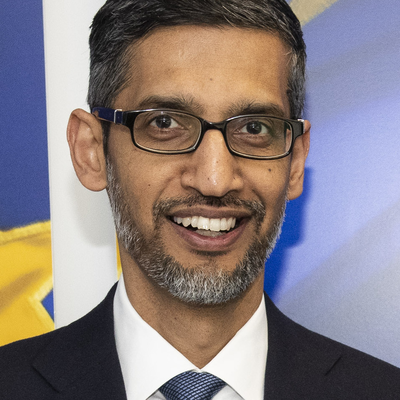
The consensus is unusually tight. NVIDIA's Jensen Huang declared that the agentic AI inflection point has arrived (per investor.nvidia.com). Microsoft's Satya Nadella told investors agents will proliferate and become the dominant workload, reshaping the tech stack itself, and framed the near-term shift as moving from answering questions to executing multi-step tasks with clear user control points (per Microsoft). Google's Sundar Pichai says the company is firmly in the agentic Gemini era. Even the practitioner mood has turned: Andrej Karpathy wrote that agentic engineering raises the ceiling and that he has never felt more behind as a programmer (per x.com). The frontier is agents.
The consensus does not survive contact with production
Stanford HAI's 2026 AI Index found organizational AI adoption at 88 percent and generative AI used in at least one business function at 70 percent of organizations, yet agent deployment still in the single digits across nearly every business function (per hai.stanford.edu). The gap between capability and deployed agency is the widest it has been. The corpus is consistent on why:
- McKinsey found only about 30 percent of organizations reached a governance maturity of three or higher, and nearly two-thirds cite security and risk as the top barrier to scaling agentic AI (per mckinsey.com).
- BCG is blunter, attributing stalled pilots to unclear ownership and agentic AI governance chaos between pilot and scale (per bcg.com).
- Deloitte puts mature governance for autonomous agents at just 20 percent of companies (per deloitte.com).
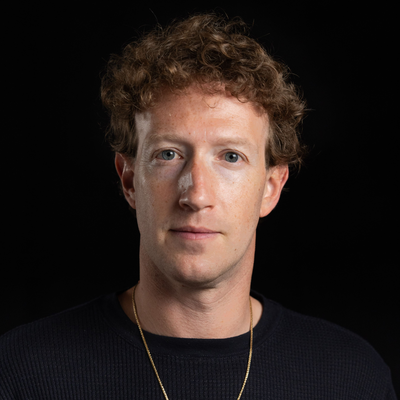
Reliability, not intelligence, is the binding constraint. Even Meta conceded ground: Mark Zuckerberg told staff that agent progress had been slower than expected (per businessinsider.com).
Where agency is governed, the payoff is already concrete
The failure mode is not the technology; it is running it ungoverned. Where the controls exist, the returns show up. NHS England is extending Microsoft 365 Copilot to more than 500,000 clinicians after a trial found an average 43 minutes of administrative time saved per day, and Nadella reported the product has passed 20 million paid seats (per Microsoft). EY said intelligent agents in finance operations delivered 95 percent faster lead times and more than 37 percent lower operating costs. Novo Nordisk said a governed reasoning agent lifted its capacity to evaluate strong ideas from roughly five to ten per quarter to more than 50. Banco Popular Dominicano said a specialised-agent ecosystem now monitors 100 percent of its operational risk universe in real time, up from about 40 percent, while cutting manual effort by 70 percent (all per blogs.microsoft.com). The word doing the work in every one of these is governed.
How fast, and the honest disagreement
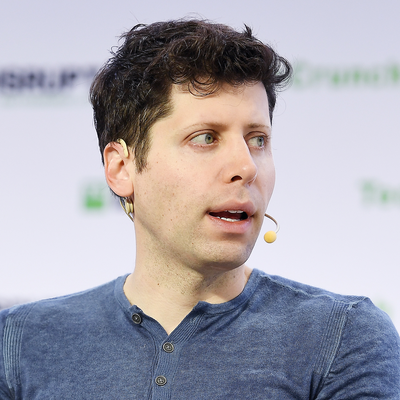
On how fast the frontier itself is moving, the labs are loud and the calendar is vague. Anthropic says it expects far more dramatic AI progress over the next two years and that extremely powerful AI is arriving far sooner than most assume (per anthropic.com). OpenAI's Sam Altman says the world is very close now to systems smarter than humans in some important ways (per forum.openai.com). Microsoft's Mustafa Suleyman put a horizon on it, saying professional-grade AGI is coming into view within two or three years (per ft.com). But the frontier is not one-voiced: Mistral's Arthur Mensch says he does not believe in AGI at all, calling it a quasi-religious concept (per lemonde.fr). For operators, the useful reading is that the timeline debate is now a distraction from the deployment one. The models are already ahead of most organizations' ability to run them safely, and that gap widens with every release.
What to watch: not the next model's benchmark, but the first quarter in which agent deployment breaks out of the single digits — because that is the number that will show whether governance finally caught up to capability.