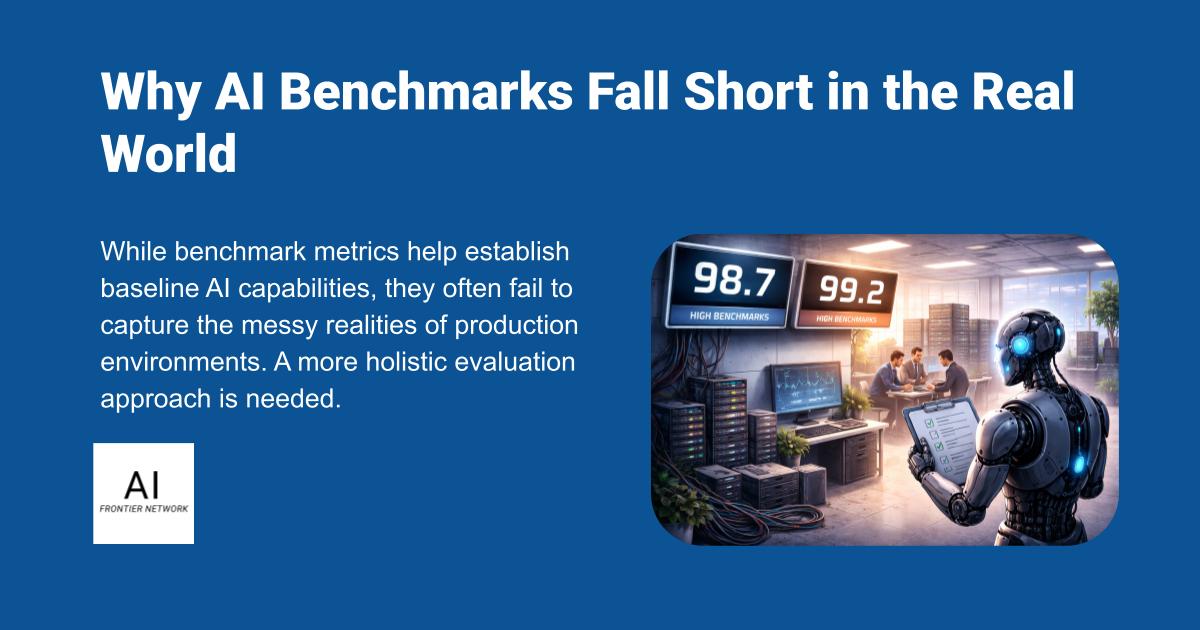
The gap between AI benchmark performance and real-world success continues to widen as more systems move into production. While clean-room evaluations serve an important role in research and development, they increasingly fall short of predicting how AI systems will actually perform when deployed.
The fundamental issue lies in how benchmarks create artificial conditions that rarely match reality. They rely on static, well-structured datasets with clear success criteria. But production environments are dynamic and messy, with constantly shifting data patterns, unexpected user behaviors, and complex business requirements that can't be reduced to simple accuracy metrics.
What matters in production goes far beyond model accuracy. Teams need to evaluate the entire system's performance across multiple dimensions: How often do users accept or override AI recommendations? Does the system actually speed up decision-making or create new friction? What are the operational costs and reliability metrics? Most critically, how do errors translate into real business impact - whether that's wasted effort, compliance issues, or customer frustration?
This reality check demands a fundamental shift in how we evaluate AI systems. Rather than treating evaluation as a one-time exam with static test sets, it needs to become an ongoing quality assurance program that evolves with the deployment environment. This means building evaluation sets from real production cases, continuously monitoring for data drift, and maintaining libraries of edge cases that represent actual failure modes.
The path forward requires connecting AI metrics to business outcomes that leadership cares about: time saved, risks mitigated, costs reduced, and value delivered. Only by grounding evaluation in these real-world impacts can teams make informed decisions about what 'good enough' really means for their specific context.