
Introduction: the tendering bottleneck
Tendering in construction remains one of the most manual and error-prone operational stages. Large contractors manage vast sets of tender documents – including technical specifications, 2D drawings, BIM models, and complex spreadsheets – that must be analyzed, structured, and distributed to a wide network of subcontractors.
In practice, this process is still largely manual. Information is scattered across hundreds of files and formats, updates arrive asynchronously, and critical requirements can be buried deep inside technical appendices. Even experienced teams struggle to maintain consistency and accuracy under tight deadlines.
The efficiency of tendering is typically undermined by several structural factors:
- Information fragmentation: Tender requirements are distributed across heterogeneous documents, making it difficult to extract a single, reliable scope of work.
- Administrative overload: Manual alignment of drawings, specifications, and schedules creates coordination gaps and repeated rework.
- Communication silos: Subcontractors respond in different formats and assumptions, complicating bid comparison and increasing the burden on estimating teams.
- Opportunity costs and burnout: Proposal teams spend a disproportionate amount of time on document handling rather than commercial analysis, which not only increases fatigue and limits the number of tenders a company can pursue but also represents significant labor costs.*
*Conservative benchmarks suggest that a single manual tender can cost nearly $5,000 in labor, while large-scale commercial projects may exceed $238,000 when including senior technical review and subcontractor coordination.
While project management and accounting tools have evolved, tendering often remains disconnected from these systems. As a result, it continues to act as a bottleneck – especially for large commercial and mixed-use developments where complexity and competition are highest.
This article examines why tendering has become such a critical pressure point in construction operations and explores how AI can address the most challenging parts of the process. To illustrate these ideas in practice, I will share how our company ZONE3000 applied AI for a European general contractor.
The operational problem: manual tendering at scale
The primary challenge of large-scale tendering is not merely the volume of documents, but a lack of structural coherence.
Drawings may contain details that contradict written specifications. While professional practice relies on "Order of Precedence" clauses or the "complementary" principle – as established in AIA A201 or RICS standards – to resolve these discrepancies, manual verification across hundreds of documents remains a major delay.
Traditional tender workflows amplify these vulnerabilities:
- Multimodal information fragmentation: Tendering begins with a massive influx of unstructured data, where tender sets often exceed 600 pages. This creates a high risk of "information blindness" where critical technical standards are missed during manual processing.
- Pre-tender ambiguity: Problems often originate with vague specifications or unrealistic budget approvals. When tender documents are flawed, resulting bids are inherently unreliable and prone to cost overruns.
- Tender office administrative sink: Senior estimators are forced to spend entire workweeks manually scanning documents to isolate requirements instead of focusing on commercial strategy.
- Version control risks: Relying on a patchwork of email and spreadsheets makes it difficult to ensure every bidder receives addenda simultaneously, creating an uneven playing field and increasing commercial risk.
- Scope gap exposure: Missing a critical exclusion – such as waste removal or specific tolerances – can lead to surprise costs that erode profit margins.
- The RFI "black hole": The Request for Information (RFI) process is a significant bottleneck; the average response time is approximately 10 days, and roughly 22% of RFIs go unanswered, forcing contractors to price in unnecessary risk.
Key features of AI-enabled tendering
Based on our analysis of tendering workflows, it became clear that contractors need solutions that reduce manual work without compromising accuracy. In tendering, precision matters more than speed – technical specifications must be interpreted correctly to ensure reliable bids.
AI tools can help by:
- Automated parsing: Classifying information by discipline (architectural, structural, MEP) and identifying specific requirements across PDFs, CAD, and BIM files.
- Structured package generation: Assembling tender packages, including Bills of Quantities (BOQs) and drawings, while flagging missing information or inconsistencies.
- Response normalization: Collecting subcontractor pricing and qualifications in a consistent format to simplify comparisons.
- Bid evaluation: Highlighting cost, timeline, and historical performance differences to support informed decision-making.
All of these capabilities can be implemented through an AI-enabled tendering system, turning complex, manual workflows into structured and accurate processes.
AI solution for tendering: how it may work
Below, I’m sharing a case to illustrate how AI can support tendering workflows in construction, so you can explore similar approaches for your own organization with the help of AI and digitalization specialists.
Our company developed a solution for a European general contractor specializing in large commercial and mixed-use developments. It helped streamline tender document handling, reduce errors, and make the overall process more transparent and efficient.
A bit more detail on how the AI solution works. It consists of three core layers designed to integrate with the client's existing professional workflows:
1. Document analysis layer
This module reads and interprets tender documents, using AI to extract requirements from specifications and schematics. It then creates a unified map of all requirements and flags any contradictions for senior staff to review.
2. Automated tender package generator
Once the documents are analyzed, the system assembles structured subcontractor packages. It generates Bills of Quantities (BOQs) and organizes relevant drawings, while also highlighting missing information or potential inconsistencies.
3. Bid comparison and ranking engine
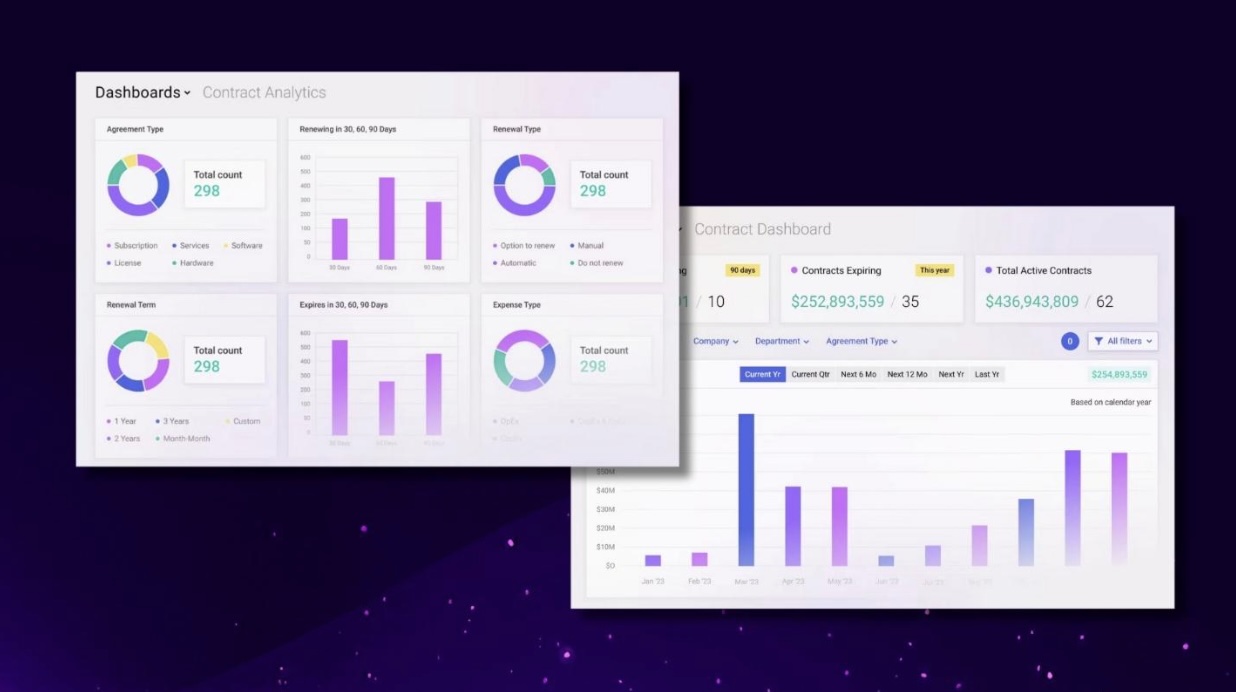
After subcontractor submissions, the AI evaluates the proposals and presents the results in a clear dashboard. The system identifies proposals that appear unusually high or low compared to the expected range, helping managers spot potential errors or risky assumptions early.
All these layers work together as a Human-in-the-Loop system: engineers and estimators still validate the results, ensuring accuracy and maintaining professional oversight. This approach lets teams handle complex tendering processes faster and more reliably, without losing control over critical technical decisions.
Operational outcomes
During the trial of the AI system, the client observed notable improvements in their tendering workflow. Document analysis that previously took weeks was reduced to just a few days, and the preparation of tender packages became considerably faster, allowing the team to handle more projects simultaneously. The system also helped decrease missing or duplicated requirements, which lowered the risk of rework, and made packages clearer for subcontractors, encouraging higher participation.
Although the AI achieves high data extraction accuracy (97–99%), it primarily serves as a precise alert system. Discrepancies are flagged for review by senior staff, ensuring that complex technical details and site-specific conditions are always validated by human judgment.
Reducing risk in tendering with AI: insights for construction teams
Based on our analysis of tendering workflows and our experience implementing an AI solution, here are key considerations for companies looking to automate tender processes:
- Map repetitive and error-prone tasks. Identify where AI can reduce manual effort, such as document parsing, BOQ generation, or bid comparison. Focus on high-volume, high-risk areas.
- Maintain human oversight. AI should assist your team, not replace them. Critical decisions, interpretation of specifications, and risk assessment must remain under professional control.
- Standardize documents and responses. Consistent formats for specifications and subcontractor proposals make automation effective and comparisons reliable.
- Integrate with existing workflows. Ensure AI tools connect with current project management, collaboration, and document systems to avoid creating new silos.
- Educate your team. Train staff on AI capabilities and limitations. Engagement and understanding are essential for adoption and to maximize accuracy.
- Pilot and iterate. Start small, measure outcomes, and refine processes before scaling. Early feedback helps adjust AI models and workflows to real-world conditions.
- Track measurable impact. Monitor time savings, error reduction, and bid quality improvements to demonstrate value and guide further adoption.
Don’t be afraid to explore modern AI solutions for tendering. Start small, learn from the process, and gradually adapt these tools to your workflows. Thoughtful adoption can help your team work smarter, reduce errors, and make more confident decisions.